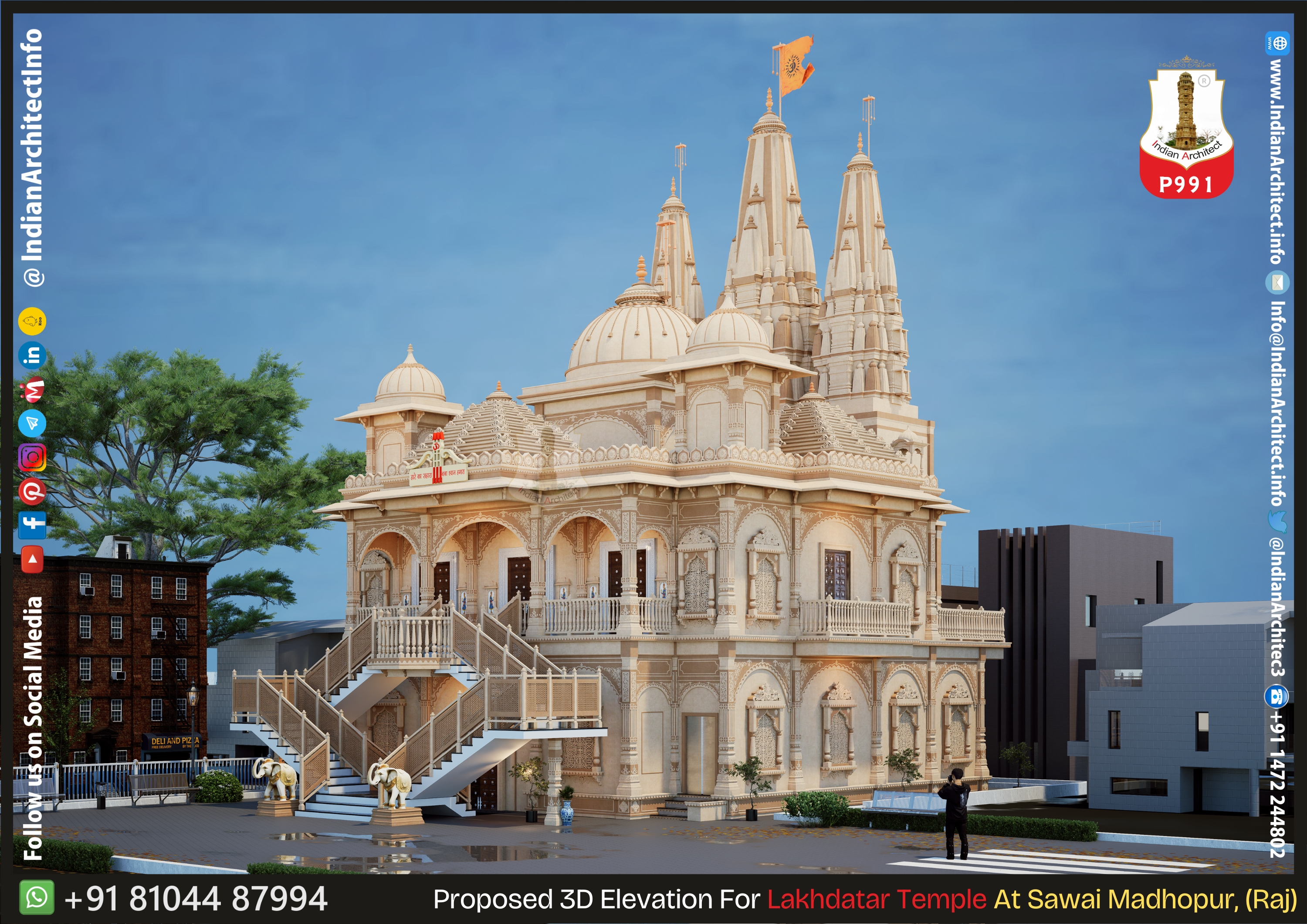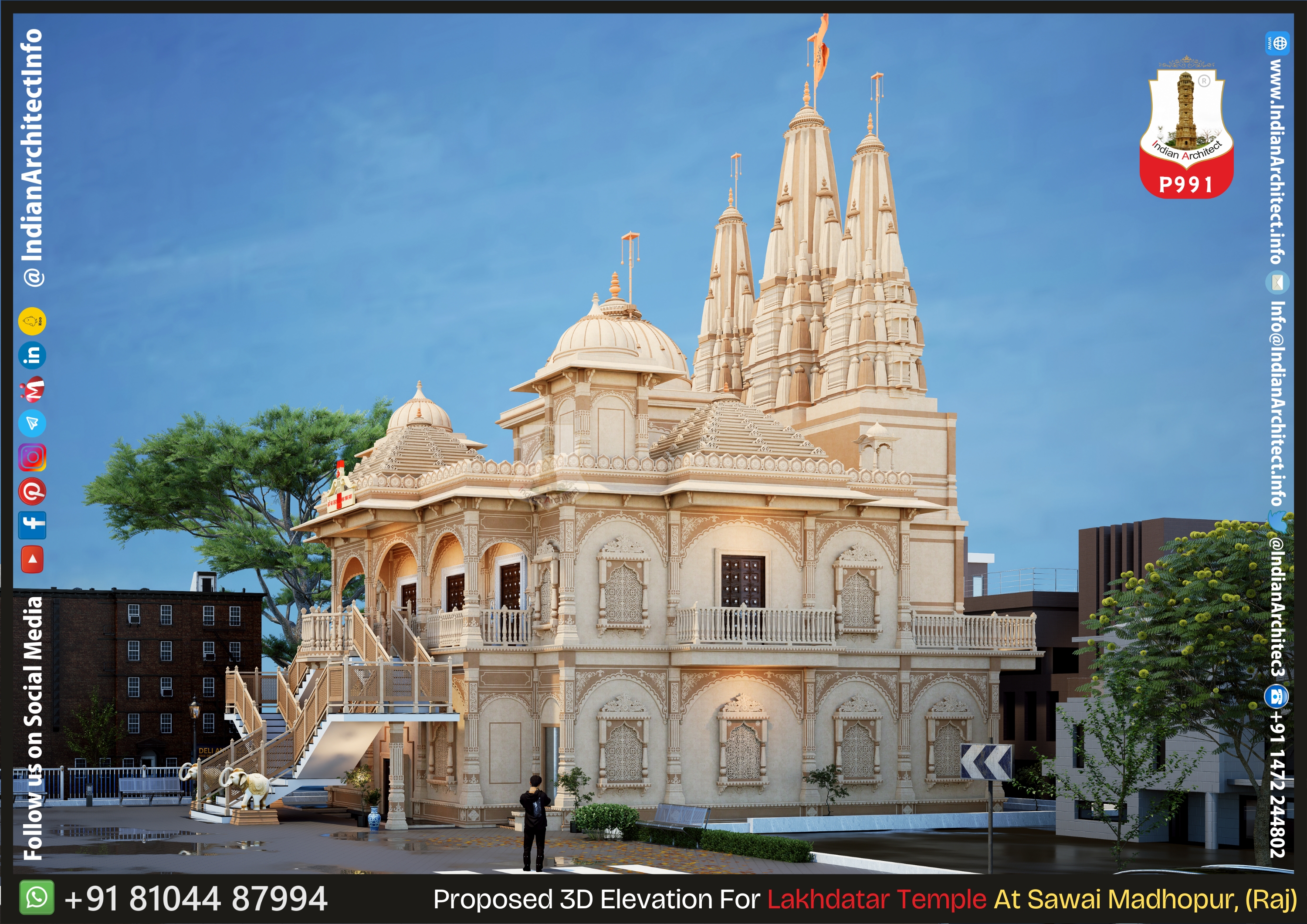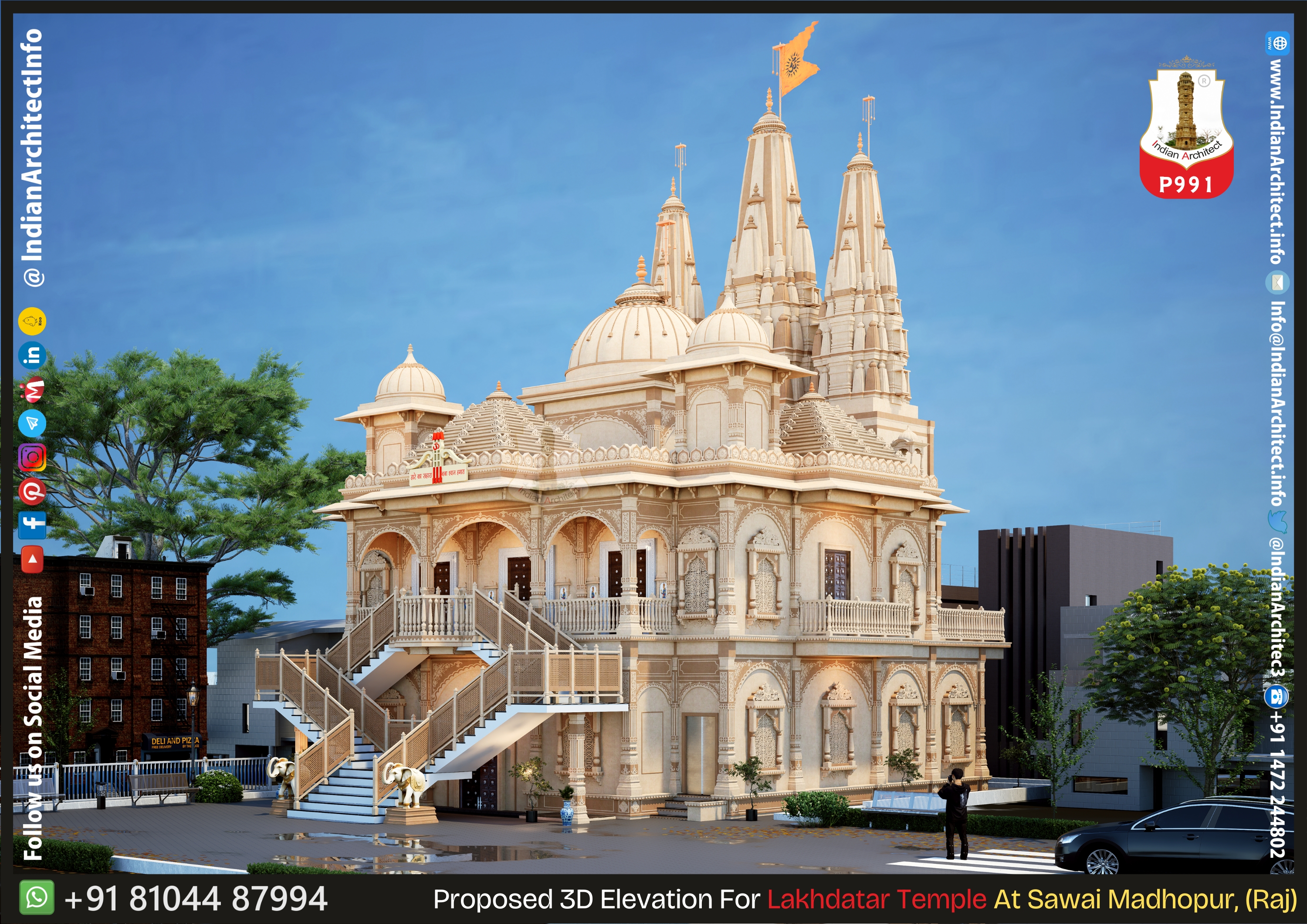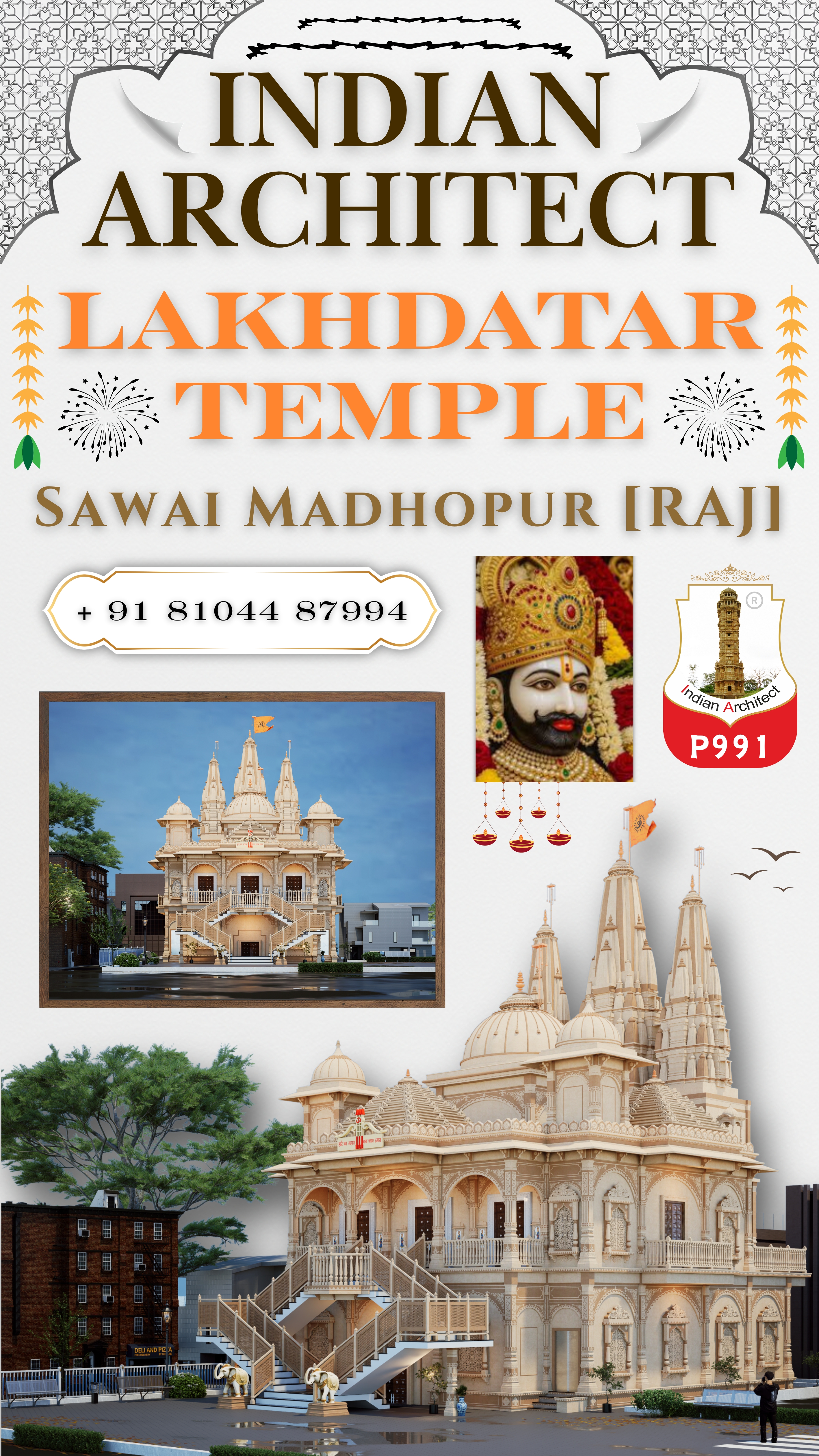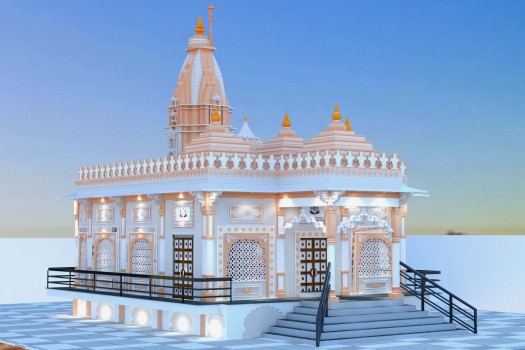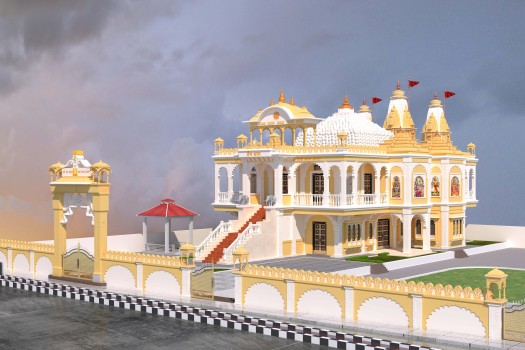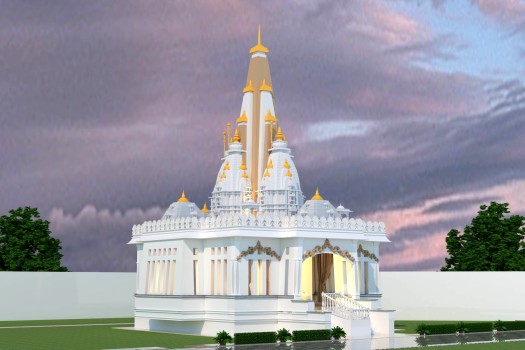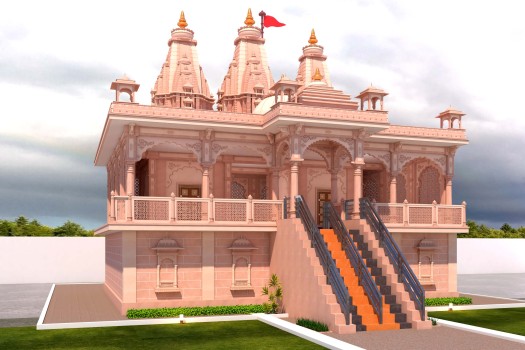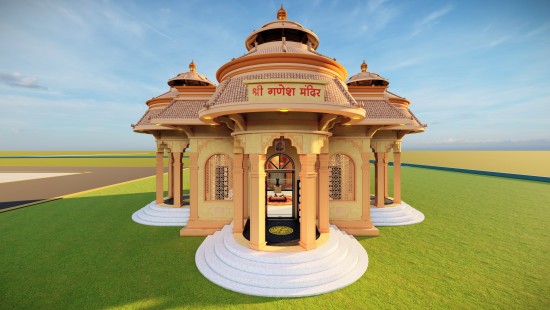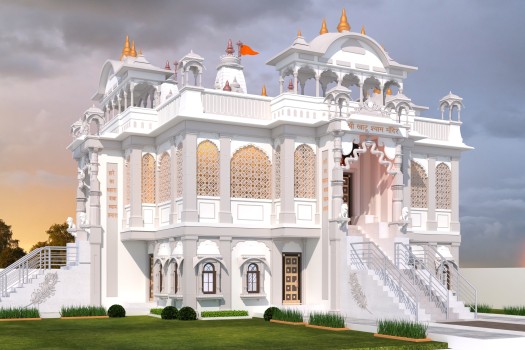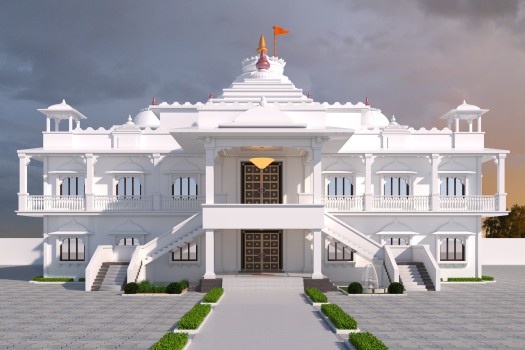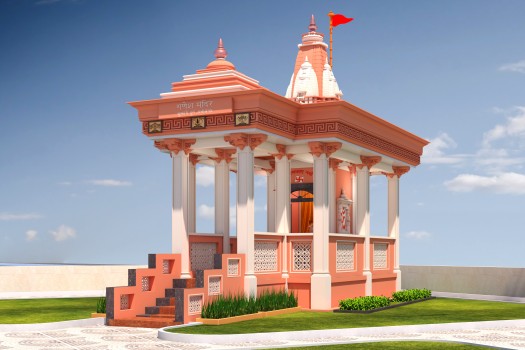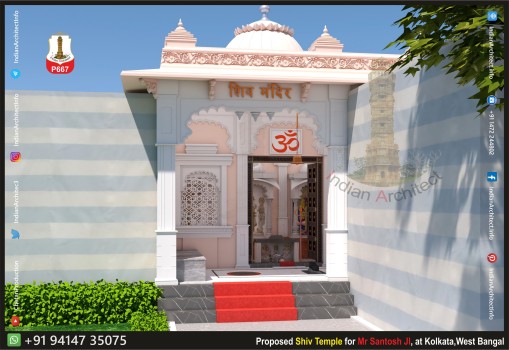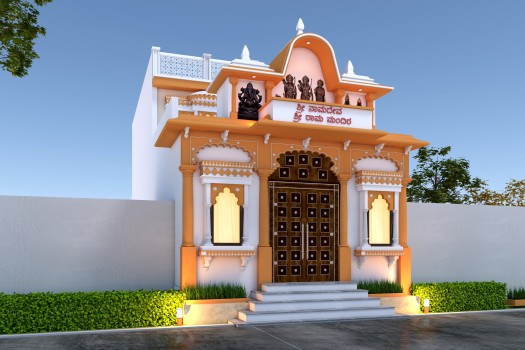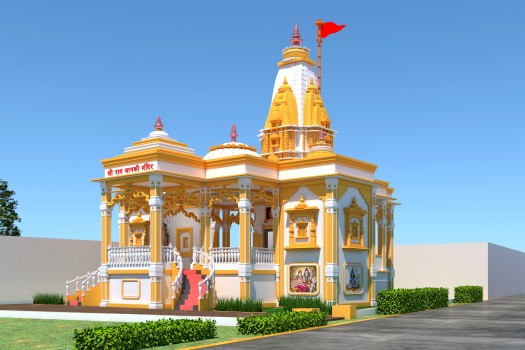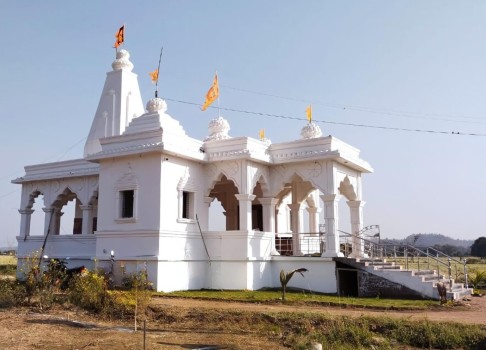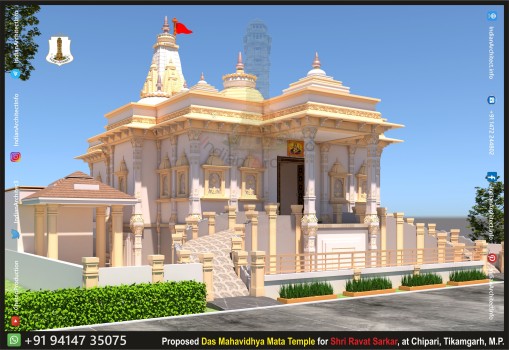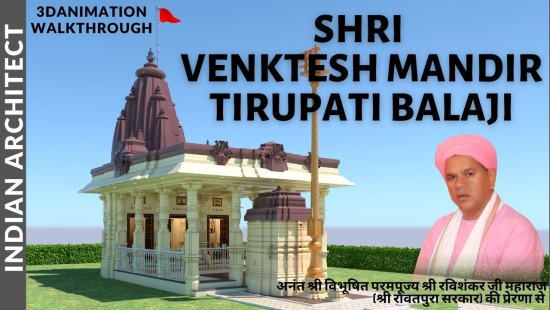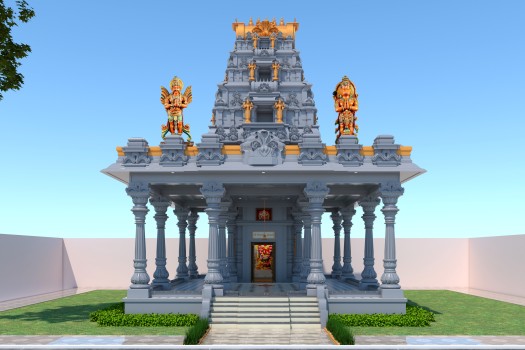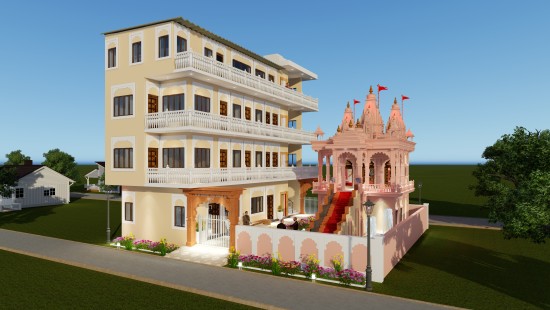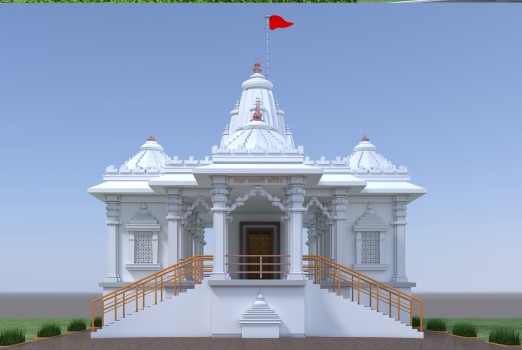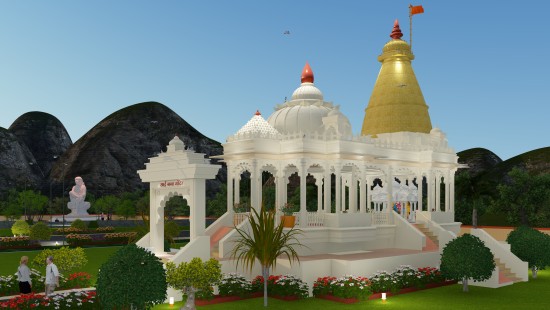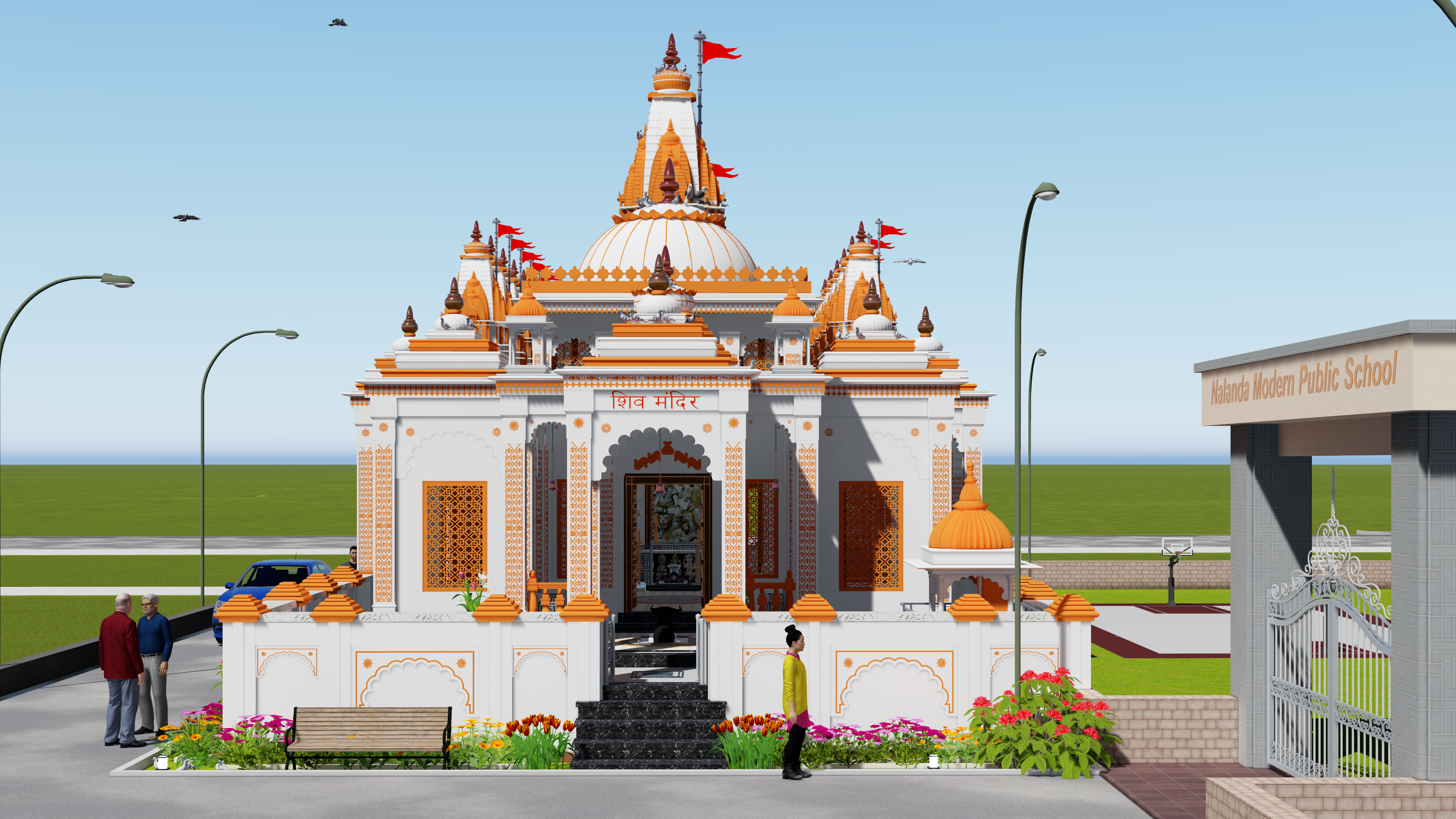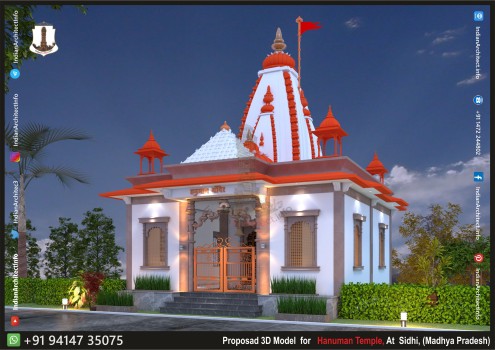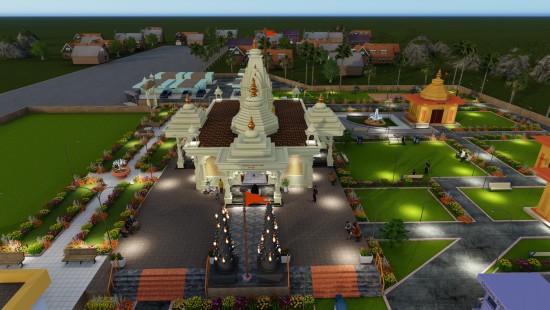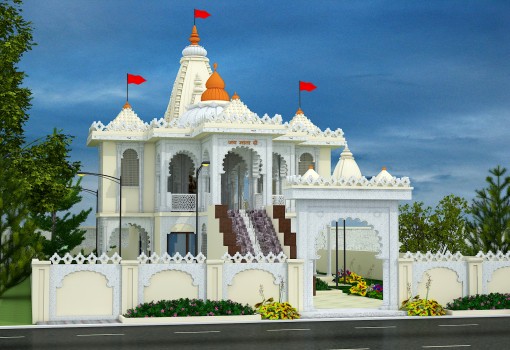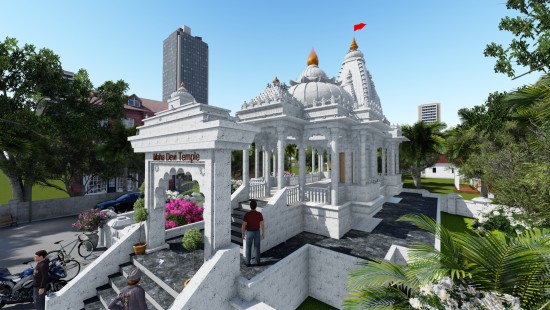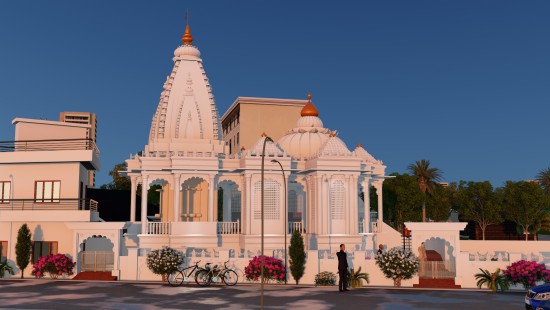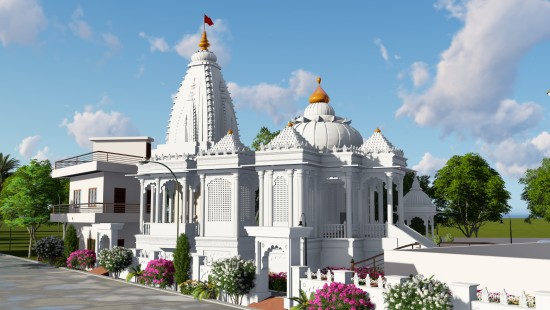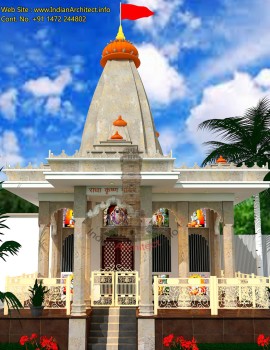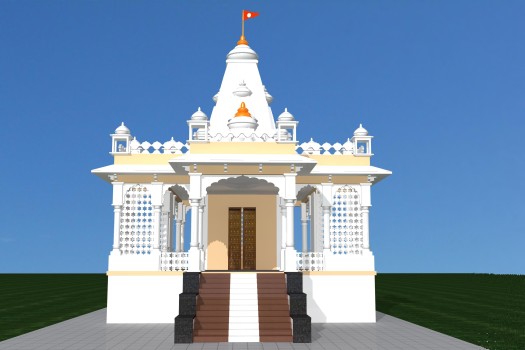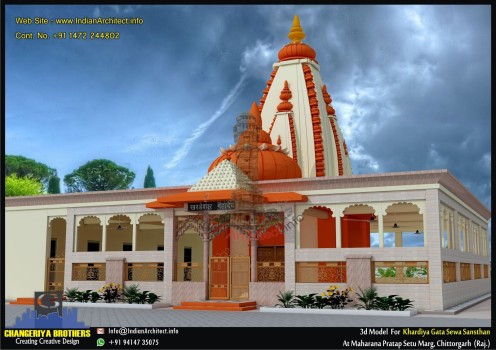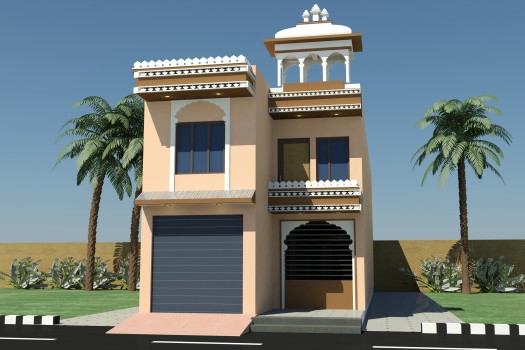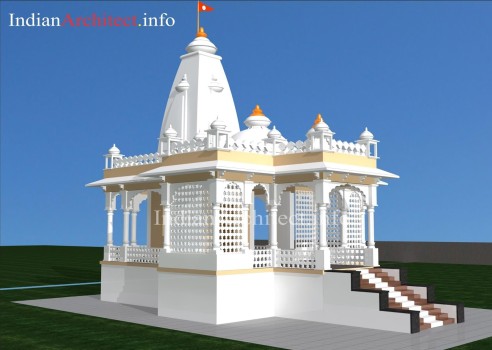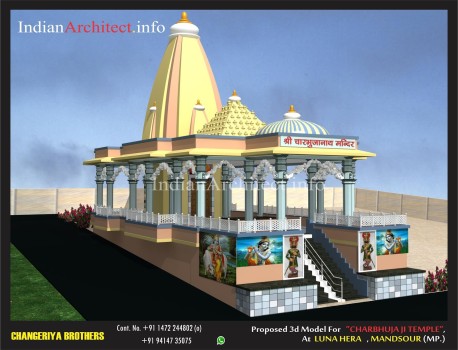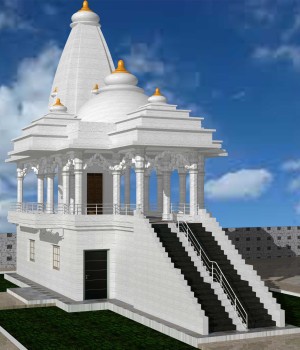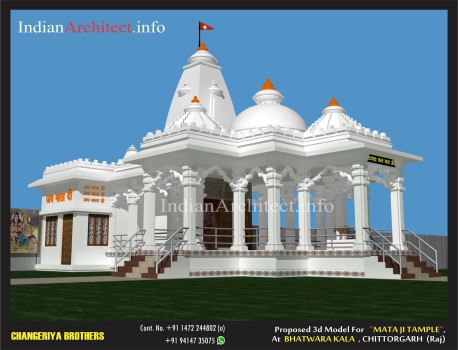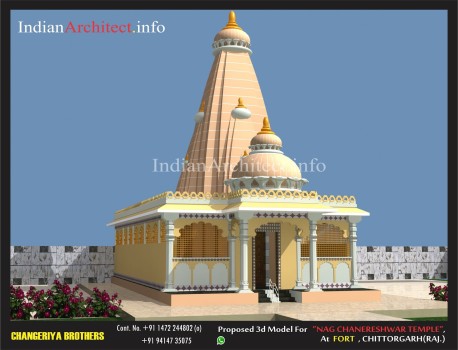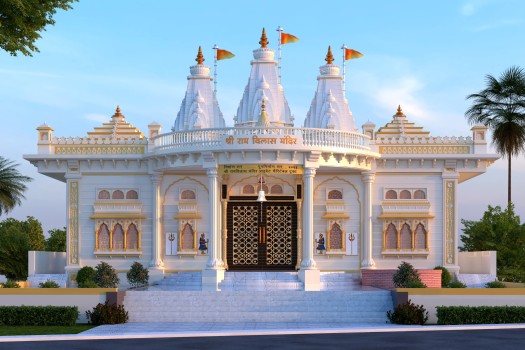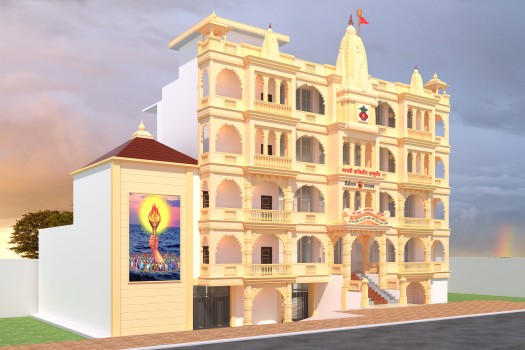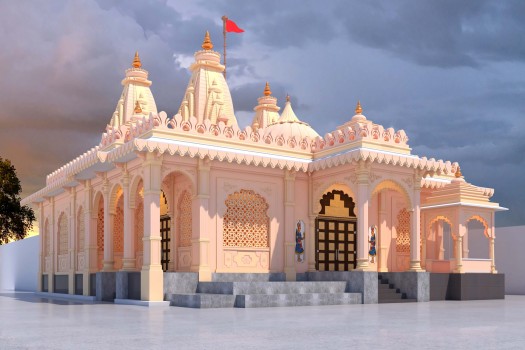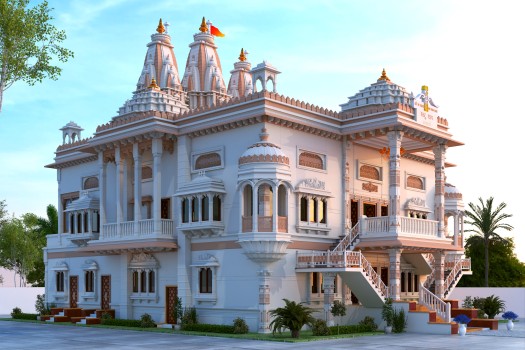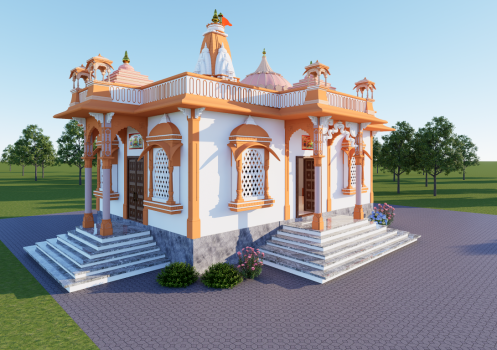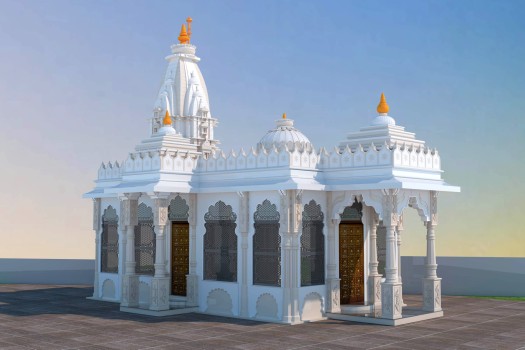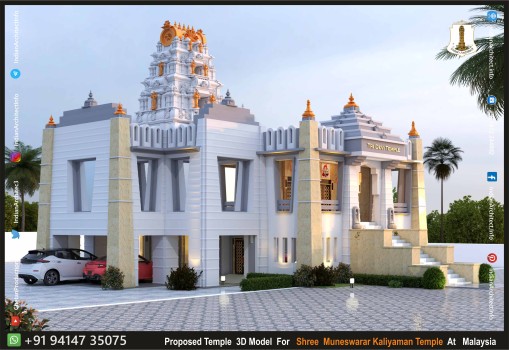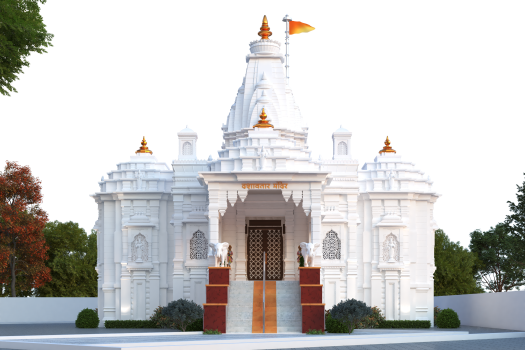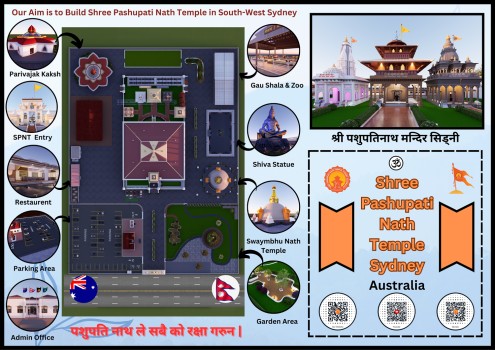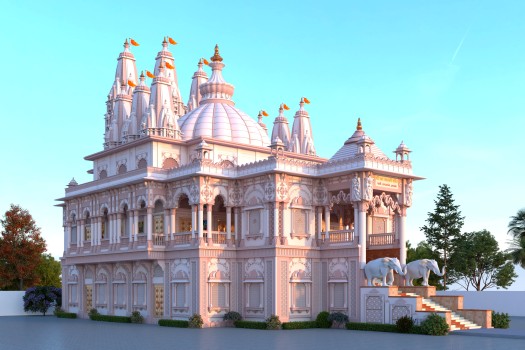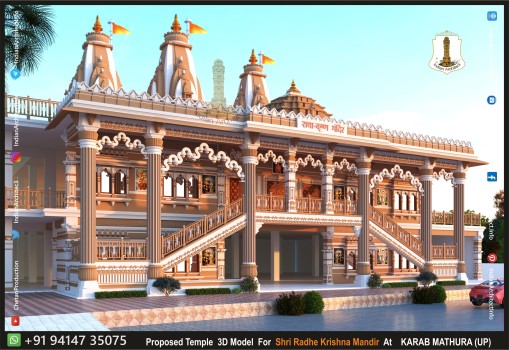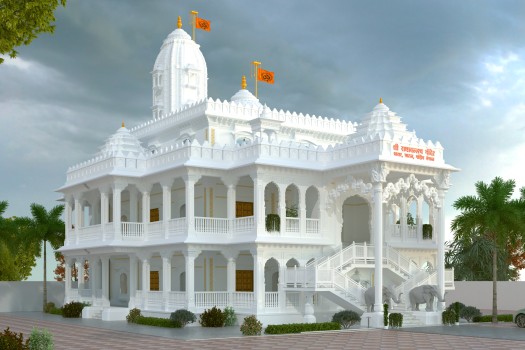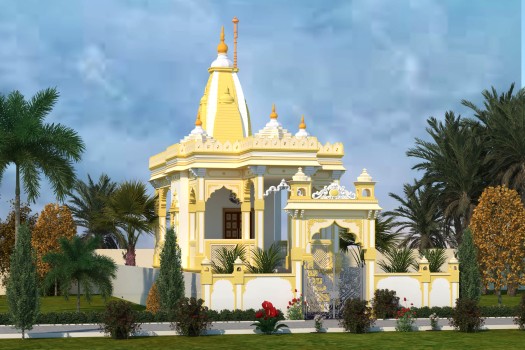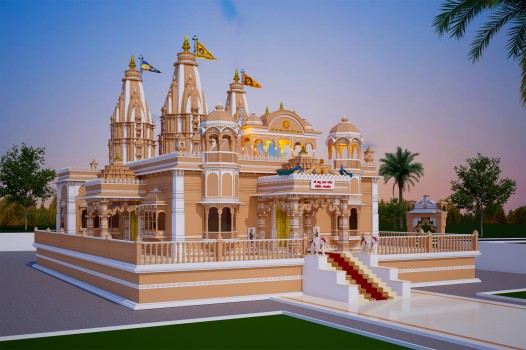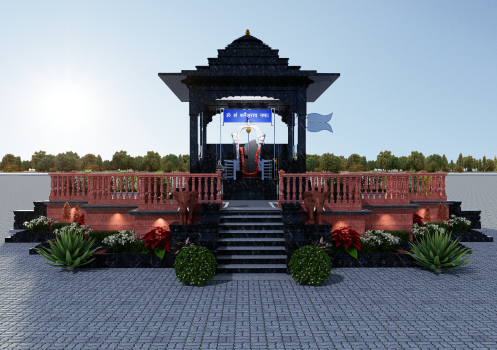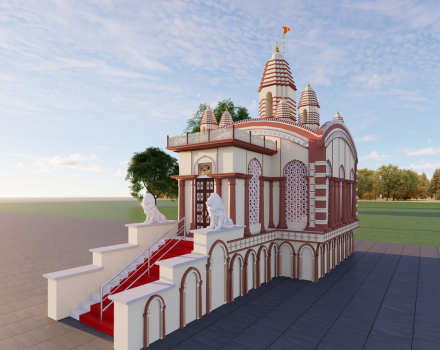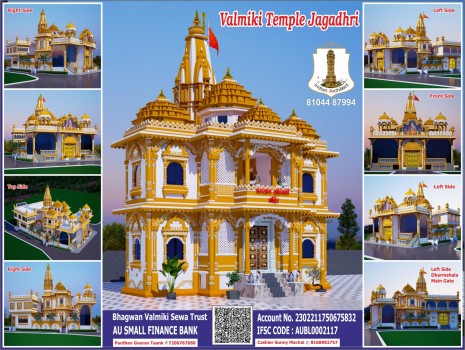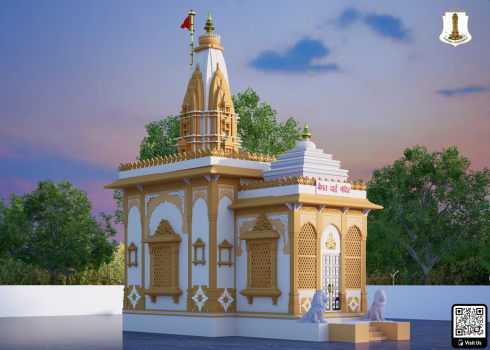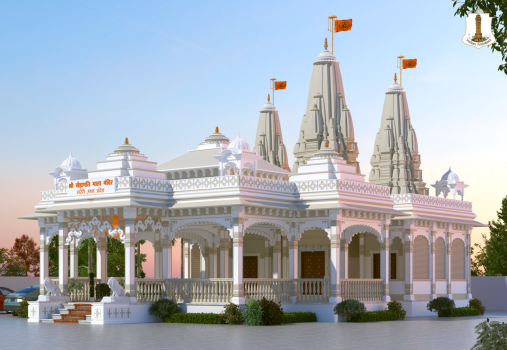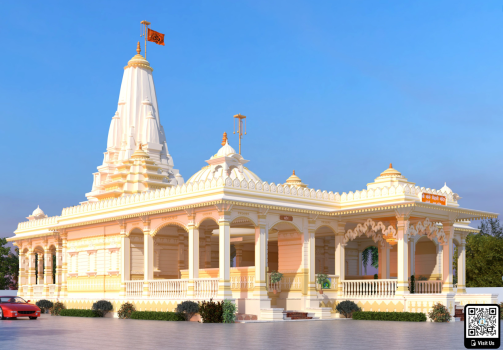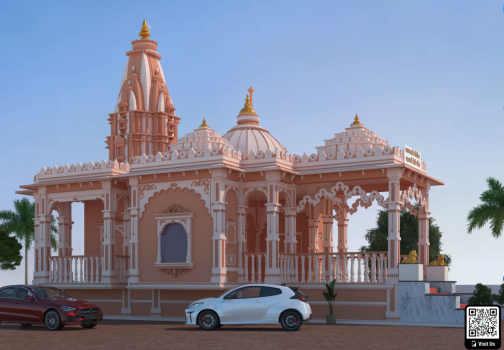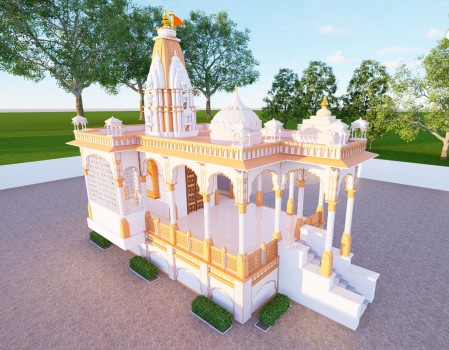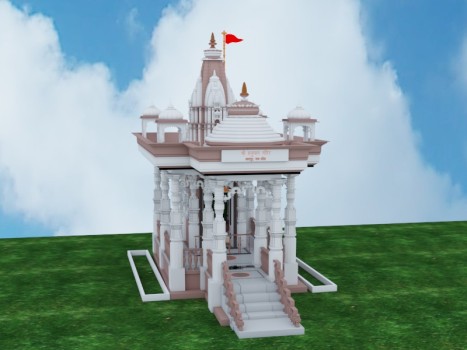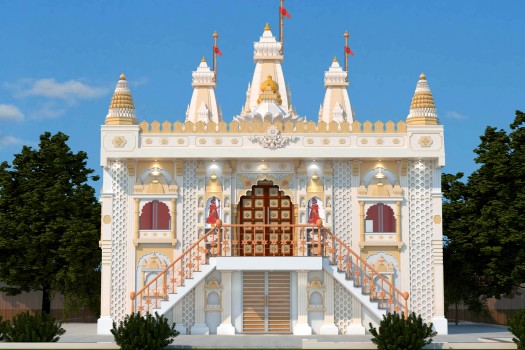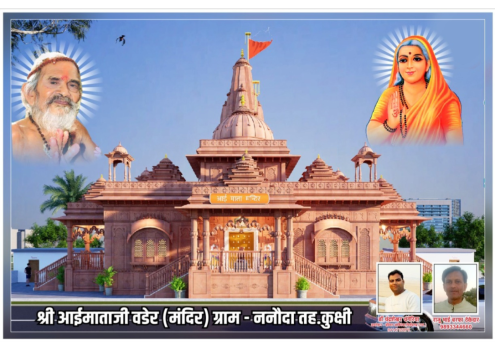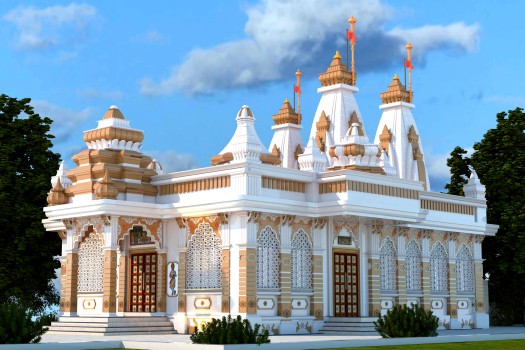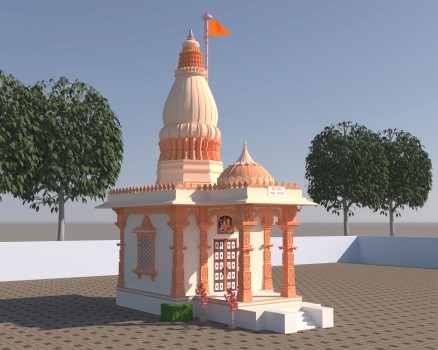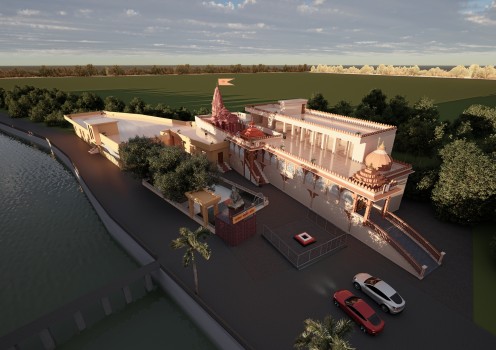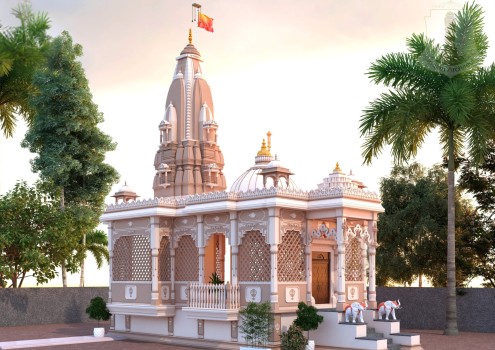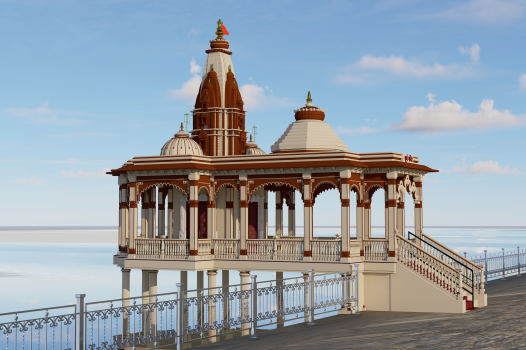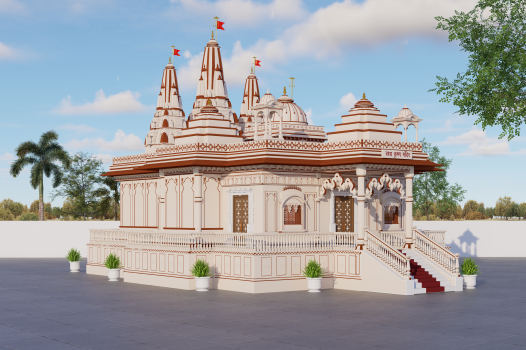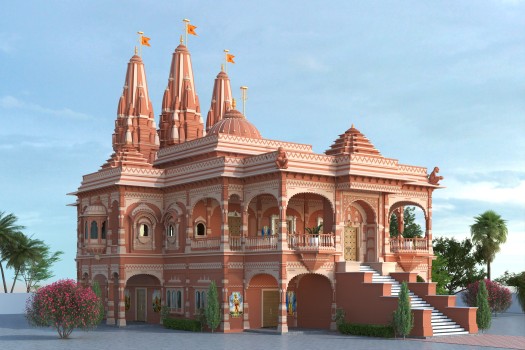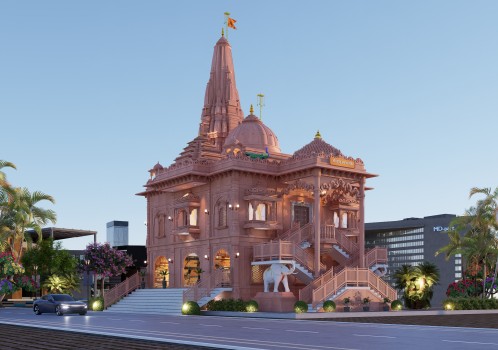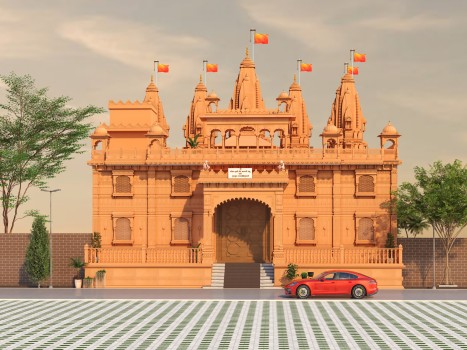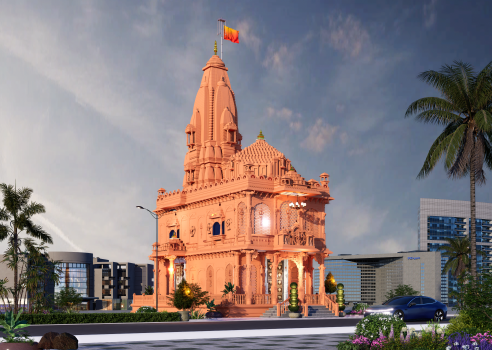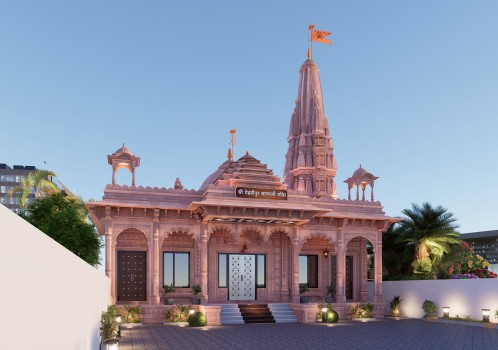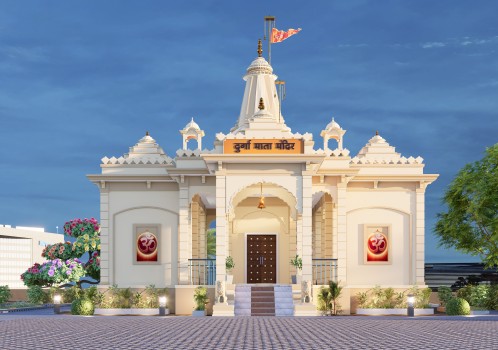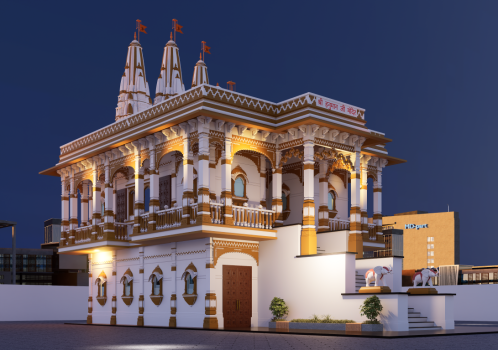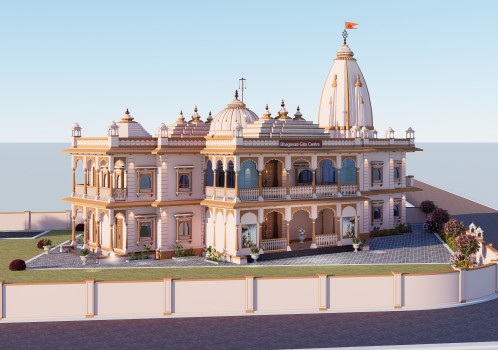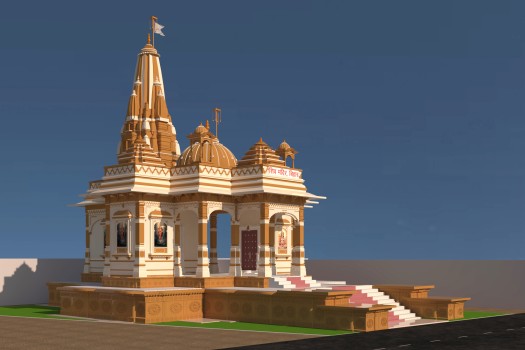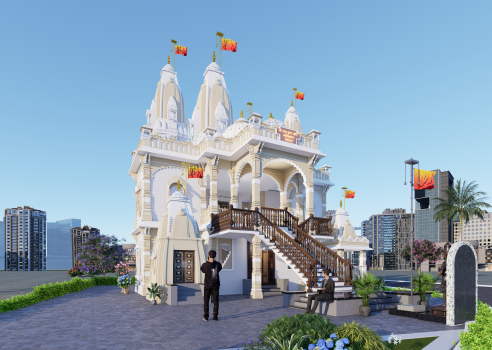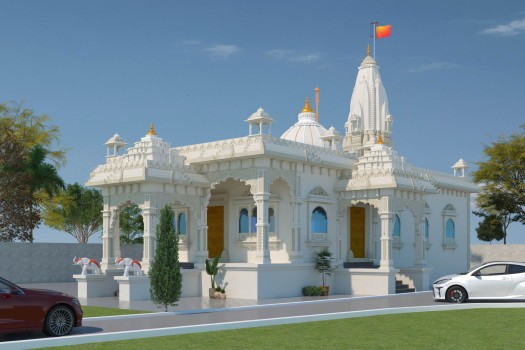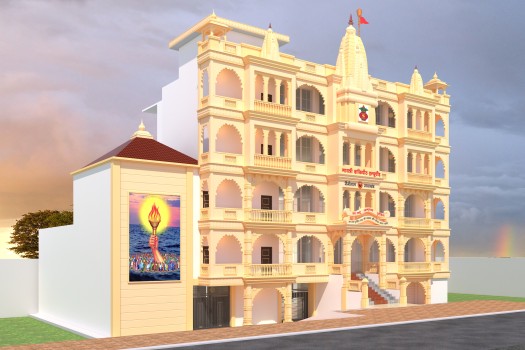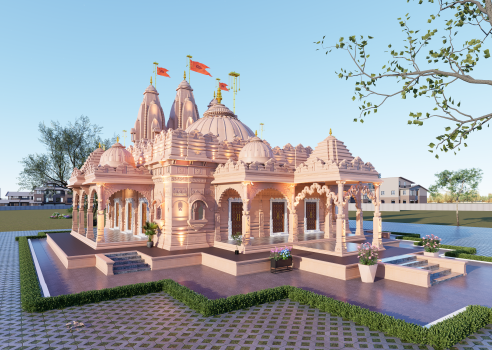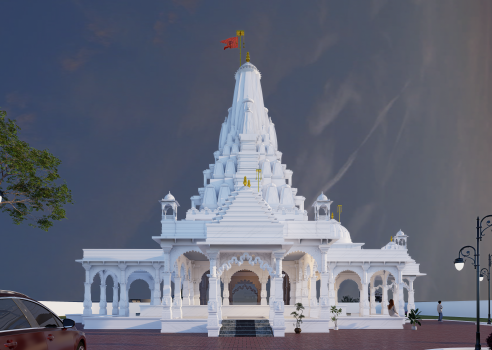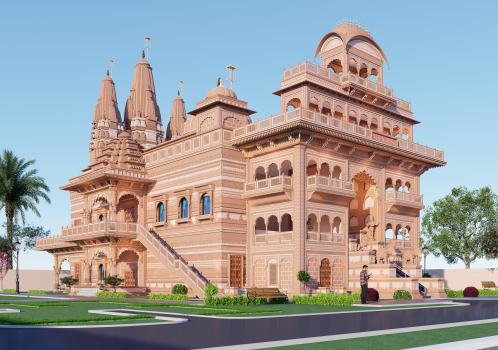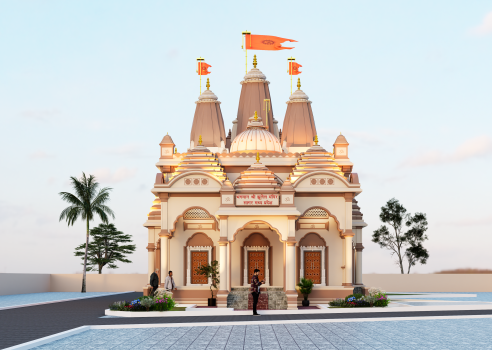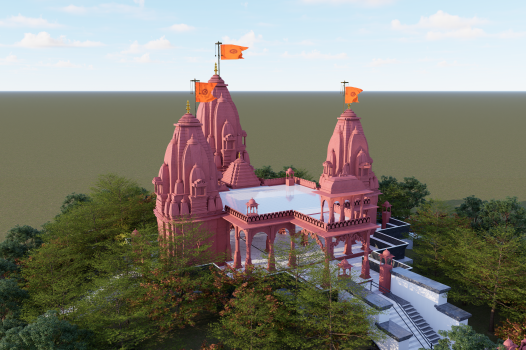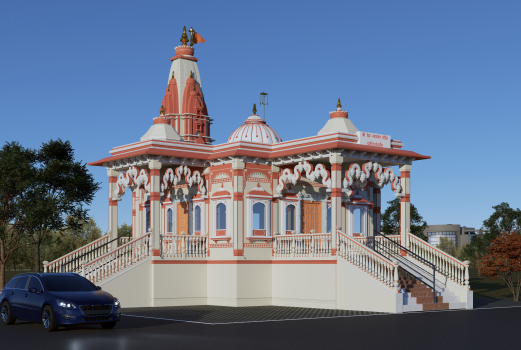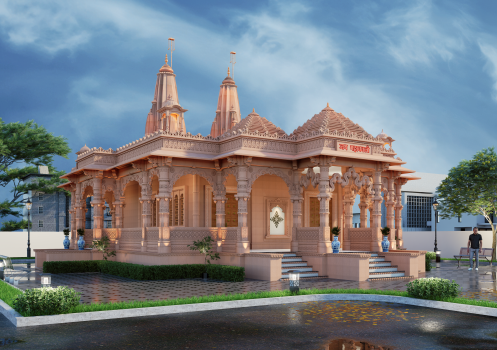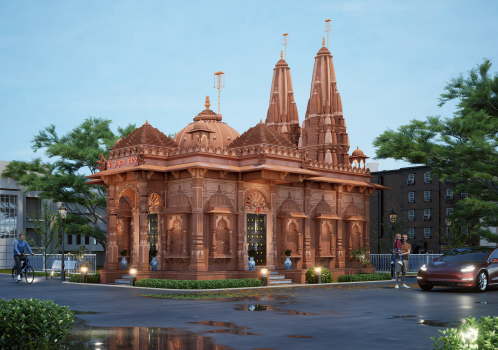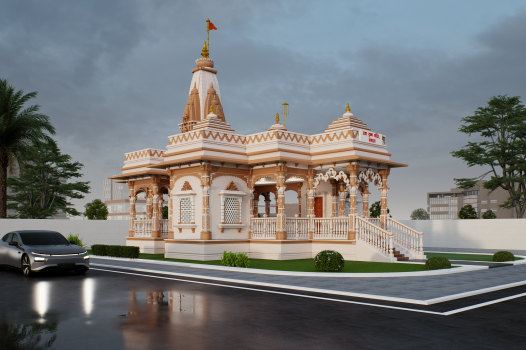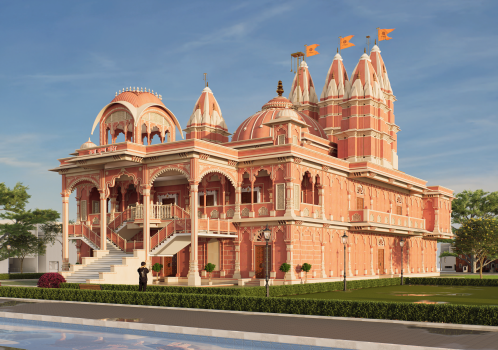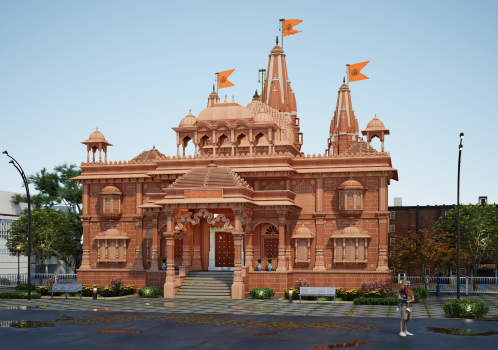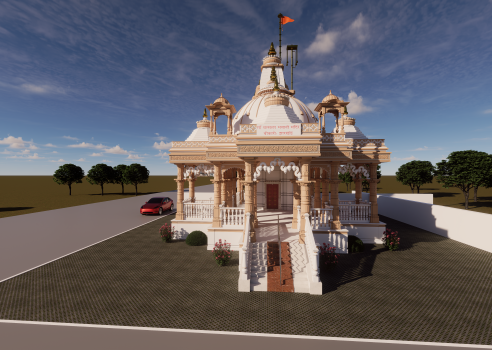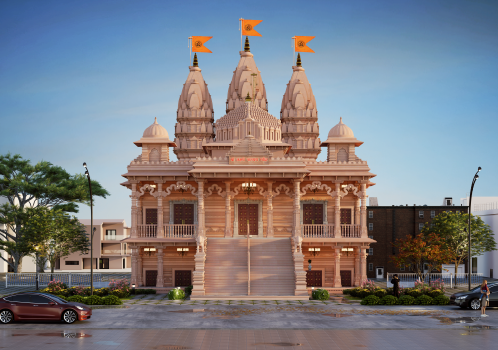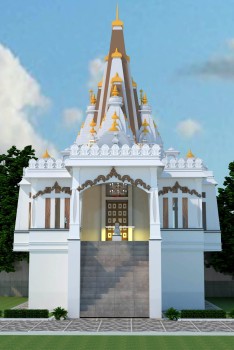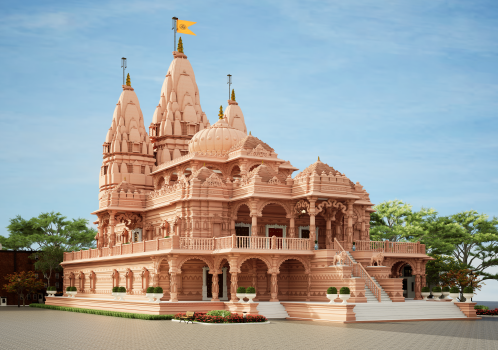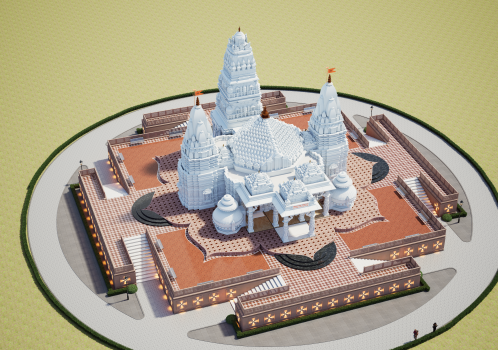
Nagara Style Architecture: The temple features a classic North Indian "Nagara" style, characterized by the multiple towering Shikhars (spires) that reach toward the sky.
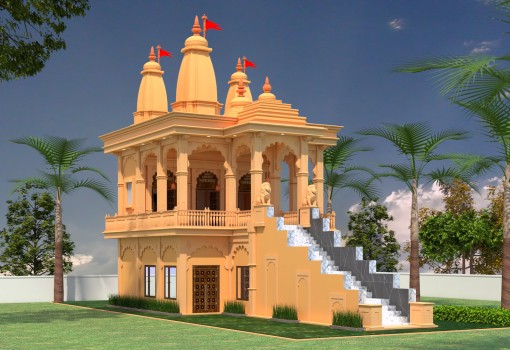
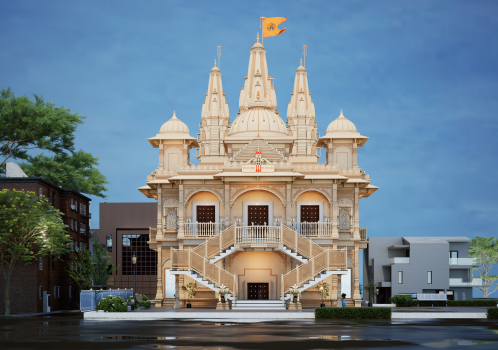
Triple Spire Design: The rooftop is adorned with three prominent Shikhars, with the central one being the tallest, topped with a sacred saffron flag (Dhwaja).
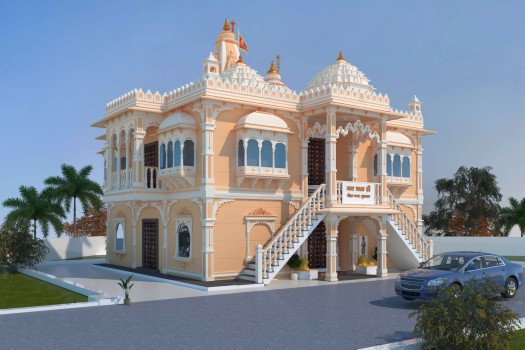
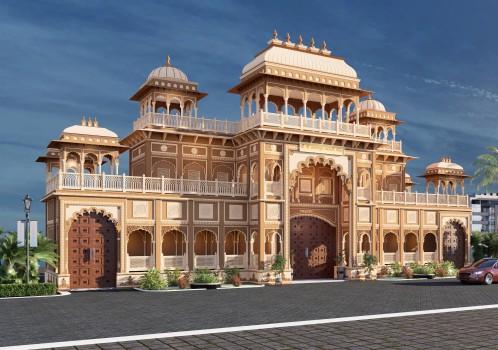
Sandstone Finish: The entire facade is designed with a beige or light pink sandstone finish, reminiscent of the royal heritage of Rajasthan.
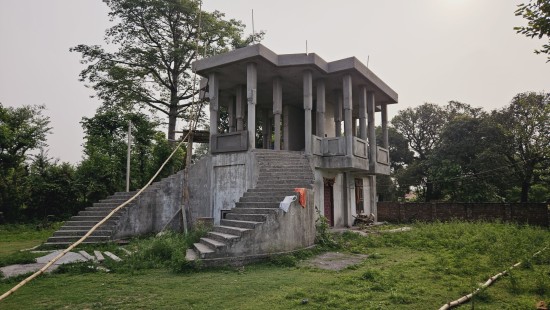
Double-Storey Elevation: The structure is built on two levels, with the ground floor likely serving as a community hall and the upper floor housing the primary sanctum (Garbhagriha).
Grand Dual Staircase: A symmetrical, wide staircase with white marble steps leads worshippers to the main prayer hall, creating a majestic entrance.
Guardian Elephant Statues: Two beautifully crafted white elephant statues stand at the base of the stairs, symbolizing strength, royalty, and auspiciousness.
Intricate Stone Carvings: Every pillar and wall is decorated with detailed Jali work and floral carvings, showcasing traditional Indian stone-cutting artistry.
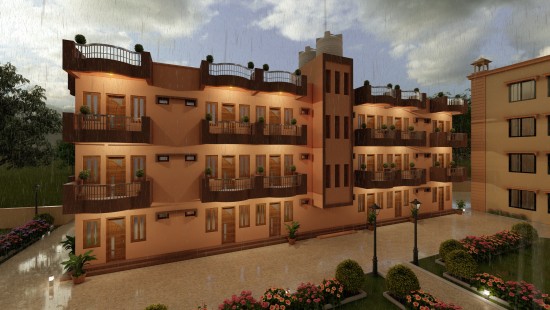
Ornate Balconies: The first floor features spacious balconies with designer railings, allowing devotees to perform Parikrama (circumambulation) with a view.
Traditional 'Jharokhas': The windows are designed as traditional Rajasthani Jharokhas, adding a historical and royal aesthetic to the building.
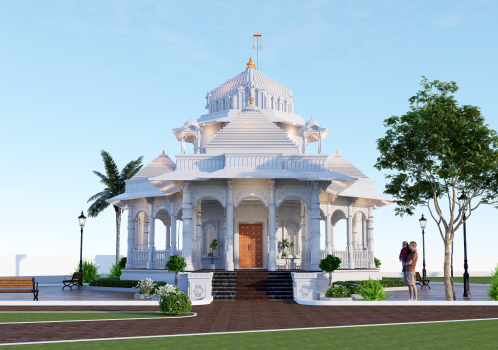
Integrated Domes: Beside the tall spires, several smaller Gumbads (domes) provide architectural balance and a sense of grandeur to the roofline.
Warm Ambient Lighting: Strategically placed warm LED lights highlight the carvings and textures of the stone, giving the temple a golden glow at dusk.
Reflective Forecourt: The polished ground in front of the temple creates a mirror-like reflection of the structure, enhancing the visual depth of the scene.
Modern Infrastructure: The surrounding area includes modern elements like paved roads, a pedestrian zebra crossing, and contemporary landscaping.
Clear Signage: The main entrance features a dedicated space for the temple’s name ("Lakhdatar"), making it easily identifiable for pilgrims.
Cultural Fusion: The design successfully marries ancient Vedic architectural principles with modern civil engineering and urban planning.
Project Description :
Nagara Style Architecture: The temple features a classic North Indian "Nagara" style, characterized by the multiple towering Shikhars (spires) that reach toward the sky.
Triple Spire Design: The rooftop is adorned with three prominent Shikhars, with the central one being the tallest, topped with a sacred saffron flag (Dhwaja).
Sandstone Finish: The entire facade is designed with a beige or light pink sandstone finish, reminiscent of the royal heritage of Rajasthan.
Double-Storey Elevation: The structure is built on two levels, with the ground floor likely serving as a community hall and the upper floor housing the primary sanctum (Garbhagriha).
Grand Dual Staircase: A symmetrical, wide staircase with white marble steps leads worshippers to the main prayer hall, creating a majestic entrance.
Guardian Elephant Statues: Two beautifully crafted white elephant statues stand at the base of the stairs, symbolizing strength, royalty, and auspiciousness.
Intricate Stone Carvings: Every pillar and wall is decorated with detailed Jali work and floral carvings, showcasing traditional Indian stone-cutting artistry.
Ornate Balconies: The first floor features spacious balconies with designer railings, allowing devotees to perform Parikrama (circumambulation) with a view.
Traditional 'Jharokhas': The windows are designed as traditional Rajasthani Jharokhas, adding a historical and royal aesthetic to the building.
Integrated Domes: Beside the tall spires, several smaller Gumbads (domes) provide architectural balance and a sense of grandeur to the roofline.
Warm Ambient Lighting: Strategically placed warm LED lights highlight the carvings and textures of the stone, giving the temple a golden glow at dusk.
Reflective Forecourt: The polished ground in front of the temple creates a mirror-like reflection of the structure, enhancing the visual depth of the scene.
Modern Infrastructure: The surrounding area includes modern elements like paved roads, a pedestrian zebra crossing, and contemporary landscaping.
Clear Signage: The main entrance features a dedicated space for the temple’s name ("Lakhdatar"), making it easily identifiable for pilgrims.
Cultural Fusion: The design successfully marries ancient Vedic architectural principles with modern civil engineering and urban planning.